



Kia
PV5
The Kia PV5 is a fully electric MPV that is a breath of fresh air in the overcrowded world of SUVs. With several body style options, this futuristic and practical family wagon offers some exclusivity next to its European rivals.
The good
Styling, practicality, drive, value for moneyThe bad
Range, interior quality, sizeTech Specs


Test Drive
Kia PV5 Passenger – First Drive (2026)
Kia is going all out with its electric car offerings and has decided to fill a gap in the market by bringing back the MPV sector.
The Korean firm is one of the most well-established and improved brands over the last 20 years and now it’s really pulling out all the stops with the PV5 – an electric MPV that is offered in Passenger and Cargo body styles and is going after the likes of the Volkswagen ID.Buzz.
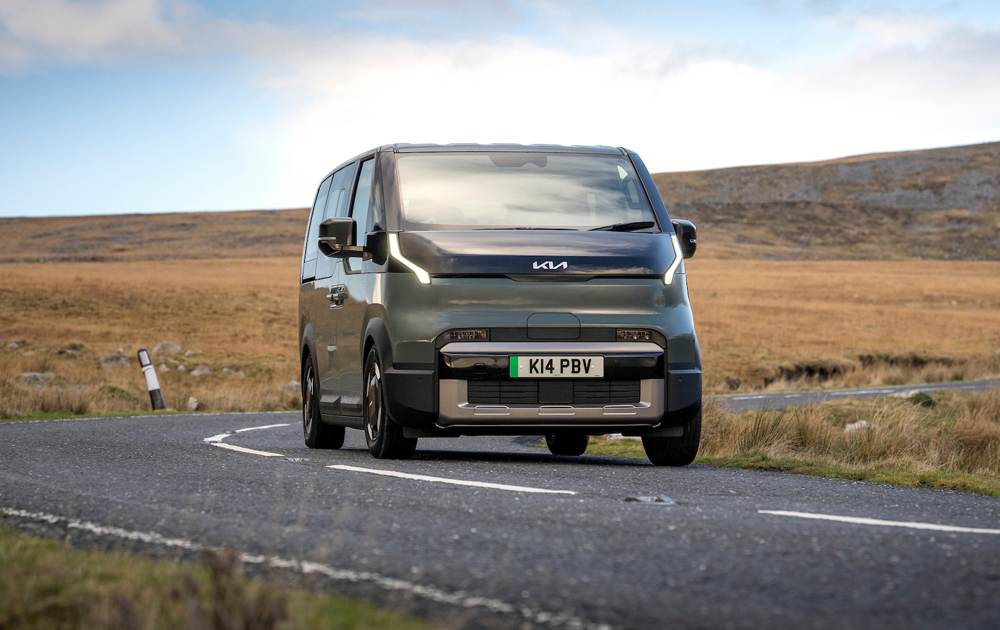
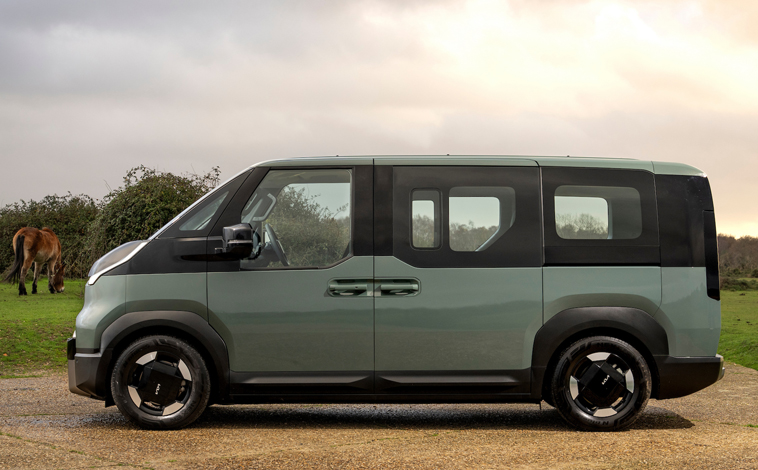
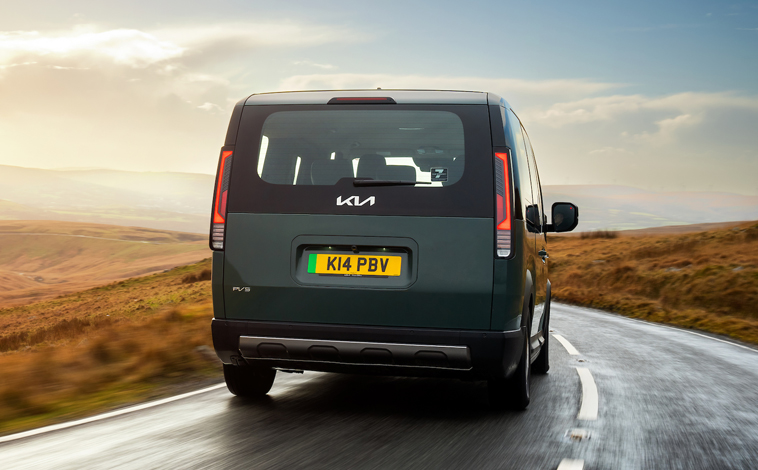
First impressions with the PV5 need no introduction with its boxy and slab-sided design, which makes it stand out on the road like no other vehicle. The flat nose and deep side windows give it that unmistakable van presence, though that might mean it’s not to everyone’s taste.
There are three trim levels on the Passenger variant called Essential, Plus and Elite and all vehicles are front-wheel drive.
The PV5 has been designed to sit on Kia’s new scalable skateboard platform, or E-GMPS for short. At the front, there is a centrally mounted charging port, vertical daytime running lights and the headlights have been positioned in the lower bumper to avoid dazzling other road users.
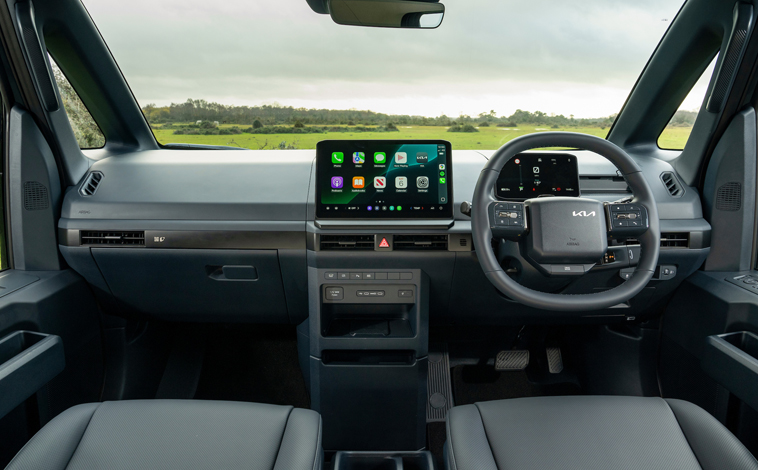
Its cabin doesn’t appear quite so high-end as some of Kia’s other electric models, but everything looks built to last and it has a solid, tactile feel. There’s a 12.9-inch central infotainment screen that is Android-based and a few physical shortcut buttons located underneath.
In terms of battery options, there are two with the standard-range 51.5kWh battery hooked up to a single electric motor to deliver a claimed range of up to 183 miles on a single charge. This version costs from £31,695 (including the £1,500 Electric Car Grant).
The PV5 Plus is equipped with a 71.2kWh battery pack and a single electric motor that offers a claimed 256 miles between charges and is priced from £34,695 after the government’s Electric Car Grant incentive.
Although the PV5 doesn’t feel as plush as other Kia models, that doesn’t mean the firm has skimped on equipment as even the Essential model comes with a 7.5-inch digital driver’s display, a 12.9-inch infotainment system and a rear parking camera. We tested the mid-level Plus which added 16-inch alloy wheels, a powered tailgate and heated front seats and steering wheel.
Inside is clutter-free and there are handy A-pillar mounted grab handles to help you climb aboard. The touchscreen itself features wireless Apple CarPlay and Android Auto, while there is Bluetooth and a six-speaker sound system.
Our test car’s 71.2kWh battery and electric motor delivered 160bhp and 250Nm of torque, and could reach 62mph in a respectable 10.6 seconds, while running out of steam at 84mph.
Behind the wheel, the most impressive point to note is how agile and easy to manoeuvre the vehicle is. The light steering and tight turning circle make driving around town a breeze and the well-damped suspension mean it is a very comfortable model to travel in. Acceleration is peppy enough with ample zip to overtake on a faster road, while there is limited wind and road noise that enters the cabin. The only downside due to the van’s tall-sided nature is it tends to lean a bit in the corners.
There are steering wheel-mounted paddles to allow you to adjust the regenerative braking settings and there is an i-Pedal drive mode, which can bring the vehicle to a complete stop without touching the brakes – ideal in stop-and-go city traffic.
To boost driver engagement, the PV5 comes with three driving modes called Eco, Normal and Snow, which can alter the handling depending on which road surface you’re on.
Storage and practicality are the PV5’s party piece, as there is now the option of five- and seven-seat configurations. There is an abundance of room inside to cater for five adults, while there is a glovebox, wide door bins with additional trays in the door bins, a wireless charging pad, a deep centre console box with access from the rear seats, seat back pockets, front cup holders, a covered tray in the top of the dashboard and USB-C charging ports.
Our test vehicle was the five-seater and with all the chairs in place, the PV5 offers 1,330 litres of cargo room, while the 60:40 split-folding rear bench can be pushed forwards to reveal a whopping 2,300-litre capacity.
Charging the PV5 with the 71.2kWh battery peaks at 150kW from a DC rapid charger, allowing a 10 to 80 per cent top-up to be completed in less than 30 minutes, or 10 to 100 per cent in 6 hours, 30 mins when using an 11kW port and 10 hours for a 7kW wallbox.
The PV5 Plus variant also boasts a Vehicle-to-Load (V2L) function, which turns the van into a mobile power supply source, enabling electronic appliances such as a kettle or hair dryer to be plugged in using the van’s battery.
All models come with an abundance of standard safety kit too, including the latest driver assistance system, while the PV5 scored the maximum five stars in the Euro NCAP crash tests. Don’t forget that there is also a seven-year or 100,000-mile manufacturer’s warranty, including an eight-year warranty for the van’s battery.
All in all, the PV5 offers something for everyone with its funky design, cavernous interior space and the handy Cargo variant for business owners. Its car-like driving characteristics are its biggest complement, while the refined cabin, neat handling, tight turning circle and affordable prices make this a very tempting proposition in the electric MPV class.